2026 Best Poly Mailer Suppliers for Global Buyers?
Choosing the right supplier matters more than finding the lowest quoted price. A dependable Ploy Mailer partner must balance material strength, production consistency, customization, and responsible sourcing. Global buyers also need clear export documentation, realistic lead times, and responsive quality support.
Robert Lilienfeld, a recognized packaging sustainability specialist, offers a useful principle: “The best package protects the product with the least material and waste.” That idea remains practical in 2026. A strong mailer should resist tearing during conveyor handling, protect labels from moisture, and seal reliably in changing warehouse temperatures. A sample test can reveal more than a polished catalog.
This guide compares leading Poly Mailer suppliers for international purchasing teams. It considers recycled content, virgin resin options, thickness, adhesive performance, printing quality, minimum order quantities, and factory certifications. Supplier transparency matters. Buyers should request material specifications, pre-shipment inspection records, and independent test results when available.
Some comparisons remain imperfect. Recycling systems differ widely by region, and “eco-friendly” claims can be difficult to verify. A compostable-looking package is not automatically suitable for every destination. Cost calculations can also change after freight, duties, rejected units, and replacement orders are included.
The strongest supplier is not always the largest. It is the partner that communicates clearly, tests honestly, and improves when defects appear. This review helps global buyers make that decision with fewer assumptions and more evidence.

Poly Mailer Basics: PE Grades, 50–100 μm Film, and Mailer Types
For global buyers comparing poly mailer suppliers in 2026, film structure matters more than glossy samples. Poly mailers commonly use LDPE, HDPE, or LLDPE. LDPE feels soft and flexible, while HDPE offers a crisper surface and higher stiffness. LLDPE often improves puncture and tear resistance. In practice, blends can perform better than a single grade.
Thickness is not strength. A 50 μm film equals 0.05 mm, while 100 μm equals 0.10 mm. The Smithers report, The Future of E-Commerce Packaging to 2029, identifies lightweight plastic formats as important in expanding delivery systems. Yet thinner film may fail around sharp corners or heavy contents. That choice matters. Buyers should request drop, seam, tear, and seal tests using real product weights.
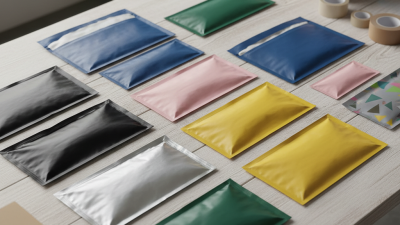
Mailer types include standard opaque envelopes, tamper-evident mailers, reusable double-seal designs, and co-extruded barrier formats. A 50–60 μm mailer may suit soft apparel. Heavier or irregular goods often need 75–100 μm film. ASTM D882 tensile testing and ASTM D1709 dart-impact testing provide useful comparison points. The OECD’s Global Plastics Outlook reports that only about 9% of plastic waste has been recycled globally, so recycled-content claims require evidence, not assumptions. Suppliers should disclose PE grade, thickness tolerance, recycled content, adhesive performance, and test conditions. I would still avoid choosing from specifications alone. Field failures reveal what laboratory sheets miss.
Global Demand: 160+ Billion Parcels in 2023 and 2026 Supplier Impact
Global parcel demand is reshaping poly mailer sourcing for 2026. The Pitney Bowes Parcel Shipping Index 2024 recorded 161.8 billion parcels worldwide in 2023. That volume creates constant pressure on packaging suppliers, especially for lightweight apparel and small consumer goods.
A capable supplier must support speed without sacrificing consistency. Buyers should review film thickness, seal strength, puncture resistance, and dimensional accuracy. A 35-by-45-centimeter mailer can fail if its adhesive strip separates during humid warehouse storage. Small details matter. Suppliers should provide batch records, material specifications, and credible recycled-content documentation. The Global E-commerce Association also identifies cross-border delivery reliability as a major purchasing concern.
The 2026 supplier landscape will reward measurable performance, not attractive claims. Request drop-test results, temperature testing, and samples from several production batches. Ask how defects are handled. This is where many evaluations remain weak. A sample may perform well, while later production changes quietly reduce film strength. Buyers should also examine minimum order quantities, lead times, printing controls, and packaging waste. The Ellen MacArthur Foundation continues to emphasize packaging reduction and circular design, but “recyclable” alone is not enough. Local collection systems differ widely. Suppliers serving global buyers need transparent data, practical testing, and honest limits.
2026 Best Poly Mailer Suppliers for Global Buyers
Global parcel volume exceeded 160 billion shipments in 2023, creating sustained demand for lightweight, durable and recyclable poly mailers. The chart shows reported global parcel volume through 2023 and a transparent 2024–2026 projection based on the 2021–2023 growth rate.
Unit: billion parcels. Historical values: 2019–2023 industry parcel-shipping index data. 2024–2026 values are calculated estimates using the compound annual growth rate observed from 2021 to 2023. Parcel volume is used as a market-demand proxy for poly mailer suppliers.
Quality Benchmarks: ASTM D882 Tensile, D1709 Impact, and Seal Tests
2026 Best Poly Mailer Suppliers for Global Buyers?
Global parcel volume reached about 161 billion shipments in 2023, according to the 2024 Global Parcel Shipping Index. That pressure makes poly mailer testing more than a purchasing formality. Suppliers should provide lot-specific results, not only attractive averages.
ASTM D882 tensile testing should show machine-direction and transverse-direction strength, elongation, thickness, conditioning, and specimen speed.
A thin film can stretch impressively yet tear around a sharp corner. That weakness matters.
ASTM D1709 impact testing uses a falling dart to measure puncture resistance. Buyers should request the method used, dart mass, sample conditioning, and failure rate. One number is not enough.
Seal performance needs separate evidence. ASTM F88 can measure seal strength, while ASTM F1921 helps evaluate hot-tack behavior during rapid production.
Ask for seal temperature, dwell time, pressure, seal width, and the failure mode, such as peel or film tear.
A practical benchmark is consistent failure outside the seal, not a seal that opens easily by hand.
Testing should include recycled-content variations when applicable, because formulation changes can alter elongation and impact results.
A 2024 flexible-packaging market report also identifies e-commerce shipping as a continuing demand driver, but market growth does not guarantee quality.
I would reject any supplier that shares only one laboratory sample. Real shipments expose weak corners, dusty seals, and inconsistent gauges. That is where a careful audit begins.
Global Compliance: ISO 18606 Recyclability, EPR, and Customs Documents
In 2026, global buyers should assess poly mailer suppliers through compliance evidence, not price alone. Ask whether the packaging aligns with ISO 18606 requirements. This standard concerns packaging suitable for organic recycling under defined conditions. However, many poly mailers are not compostable. Plastic recyclability requires separate collection and processing systems. Request material specifications, recycled-content details, and independent test reports. Do not accept vague “eco-friendly” claims.
EPR obligations differ by destination market. A reliable supplier should provide resin identification, packaging weight, and material composition data. These details support registration, reporting, and fee calculations. Confirm who handles EPR responsibilities in the sales contract. The importer may remain accountable. That detail matters. Supplier documents can also become outdated when regulations change. Recheck them before each major shipment.
Customs preparation needs equal attention. Request a commercial invoice, packing list, accurate HS classification, country-of-origin statement, and transport details. Product dimensions and unit weights should match every document. Small inconsistencies can delay clearance. In procurement reviews, I would also compare test reports with the actual mailer sample. Paperwork may describe one film while production uses another. That uncomfortable possibility deserves attention. A dependable supplier explains limitations clearly, supports traceability, and accepts reasonable document audits before shipment.
Supplier Scorecard: MOQ, Lead Time, Defect Rate, and Landed Cost
For global poly mailer sourcing in 2026, a supplier scorecard should start with MOQ, not price. A 50,000-piece MOQ may reduce unit cost, but it can trap cash and create storage pressure. The 2024 Parcel Shipping Index reported 161.1 billion parcels worldwide in 2023. Volume is expanding, yet demand remains uneven across regions. I would request three MOQ options: trial, quarterly, and full-container quantities. My first scorecard used annual demand only. That was a mistake.
Lead time needs separate production and transport columns. Ask for a signed production schedule, carton-ready date, and port departure window. A ten-day factory lead time means little if ocean transport adds five weeks. The 2023 Logistics Performance Index shows that customs, infrastructure, and shipment timeliness strongly affect supply-chain reliability. Track actual performance over at least three shipments. One successful order proves very little.
Defect rate should use a defined inspection method. ISO 2859-1 provides sampling principles, but buyers must set acceptable quality limits for seals, thickness, dimensions, and print alignment. Record defects by batch, not by average. A 1% defect rate can still mean 1,000 unusable mailers in a 100,000-piece order. Landed cost should include product, tooling, freight, insurance, duties, handling, inspection, and rework. The World Bank’s logistics research repeatedly links reliability with total trade cost, not merely transport prices. In practice, the cheapest quotation often becomes expensive after delays and sorting labor. That deserves a second review.